




The Sovereignty of Peace: Reflecting on Somaliland’s Thirty-Five Year Trajectory
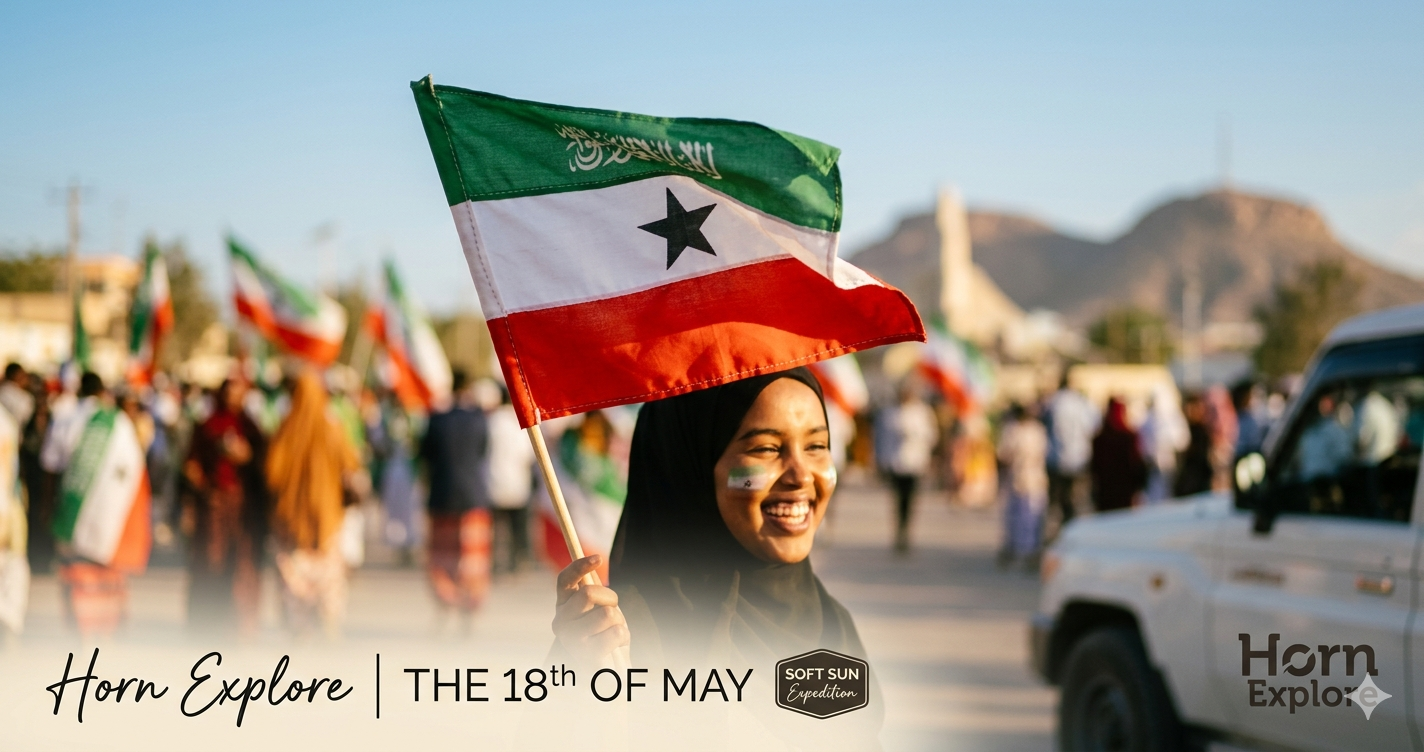
While the international community often views statehood through the narrow lens of diplomatic recognition, the Republic of Somaliland offers a compelling counter-narrative: substantive sovereignty. As we mark the anniversary of the May 18, 1991, Declaration of Independence, we celebrate more than just a historical pivot point; we celebrate a unique model of indigenous governance that has flourished in the absence of external blueprints.
The Architecture of a Self-Made State
Somaliland’s emergence from the collapse of the Somali Democratic Republic was not merely a secession—it was a reconstitution. The 1991 Burao Conference succeeded where many international interventions fail because it leveraged the Xeer (traditional law) and the wisdom of the Guurti (the House of Elders) to forge a social contract rooted in local legitimacy.
This "bottom-up" approach to nation-building has yielded results that are statistically and socially anomalous for the region:
Institutional Continuity: The successful execution of multiple multi-party elections and peaceful transfers of presidential power.
Economic Agility: A thriving private sector led by a global diaspora and a robust livestock export industry, now augmented by the strategic transformation of the Berbera Corridor.
Security Autonomy: Maintaining a stable domestic environment and contributing to maritime security in the Red Sea without a reliance on foreign peacekeeping forces.
The Strategic Horizon: From Stability to Prosperity
As Somaliland enters its mid-thirties, the discourse is shifting from "survival" to strategic significance. The expansion of the Berbera Port, in partnership with global logistics leaders, has positioned the nation as a vital gateway for the Horn of Africa and a key player in global trade routes.
However, the "recognition gap" remains a significant hurdle. Despite meeting the technical requirements of the Montevideo Convention on the Rights and Duties of States, Somaliland operates in a state of diplomatic limbo. This year’s celebrations are characterized by a renewed call for the international community to align its policy with the reality on the ground—acknowledging that Somaliland is not a "fragment," but a functioning, democratic entity.
A Testament to Resilience
"Somaliland’s greatest export is not gold or livestock, but a blueprint for peace. It is proof that democratic values can be harmonized with traditional structures to create a resilient, modern state."
May 18 serves as a moment of profound national introspection. It is a day to honor the legacy of those who envisioned a free Somaliland during the struggle of the 1980s and to empower the digital-native generation that is currently driving the nation’s technological and cultural renaissance.
Conclusion
As the flag is raised across the country today, the message is clear: Independence is not just a status; it is an action. It is found in the paved roads, the university lecture halls, and the peaceful ballot boxes. Somaliland has spent 35 years proving its viability; today, we celebrate the enduring spirit that made it possible.
Hambalyo, Somaliland.




Comment (0)
Leave A Comment: