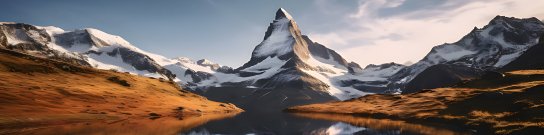



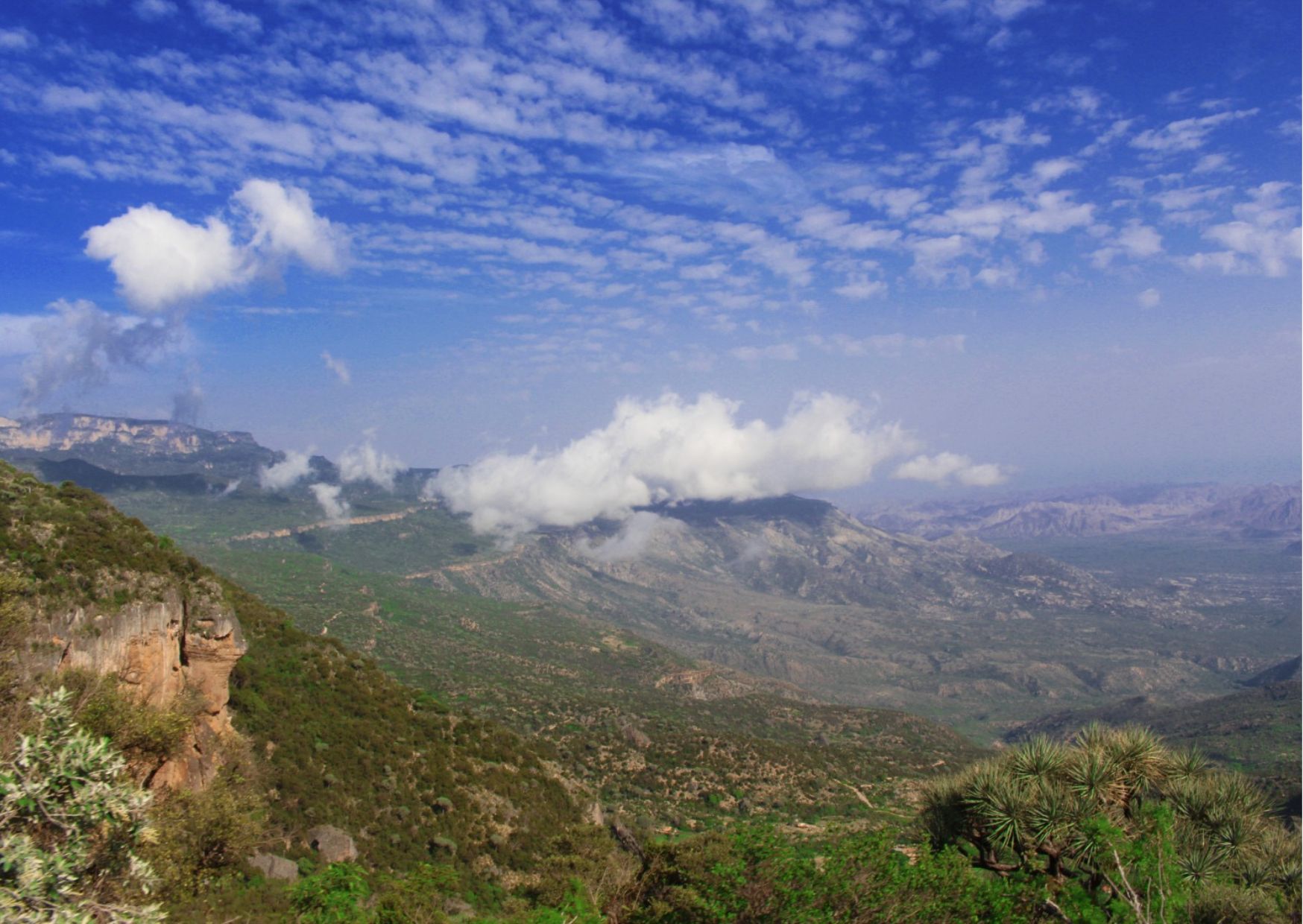

Deep in the mountains of Sanaag, where ancient forests rise above the dry landscapes of the Horn of Africa, Mount Shimbiris and the Daallo Forest reveal a side of Somaliland that few travellers ever get to see.
There are places in the world that announce themselves loudly.
And then there are places that wait.
Mount Shimbiris is one of those places.
Far from the busy streets of Hargeisa, beyond the familiar landscapes of Somaliland's western highlands, the mountains of Sanaag rise dramatically above the northern Horn of Africa. Here, the landscape changes completely. Dry plains give way to steep escarpments. Rocky slopes become green with mountain vegetation. Clouds drift across forested ridges. The air becomes cooler, quieter and cleaner.
At the heart of this extraordinary landscape stands Mount Shimbiris, the highest summit in Somaliland and one of the most remarkable high points of the Horn of Africa.
Nearby lies Daallo Forest, one of the most spectacular natural environments in the region.
Together, Shimbiris and Daallo form part of the remarkable Cal Madow mountain system, a landscape of cliffs, forests, mist, wildlife and extraordinary biological diversity.
For travellers looking beyond the usual tourist destinations, this is not simply another mountain.
It is a journey into one of the least-known natural landscapes of the Horn of Africa.
---
Mount Shimbiris: The Roof of Somaliland
Mount Shimbiris rises to approximately 2,460 metres (8,070 feet) above sea level.
It is located in the Sanaag region, within the broader Cal Madow mountain system and the Ogo Mountains. NASA's Earth Observatory identifies Shimbiris as the highest point of the Cal Madow range and records its elevation at 2,460 metres.
At this altitude, Shimbiris feels remarkably different from the image many people have of Somaliland.
The country is often associated with dry landscapes, open plains, camels, coastal deserts and long roads beneath an intense African sun.
But Somaliland is much more than that.
Its northern mountain ranges create a completely different environment. Elevation, rainfall, cloud, mist and the influence of the nearby Gulf of Aden combine to produce habitats that are surprisingly green and biologically rich.
This is one of the great geographical surprises of the region: a mountain rising from a predominantly dry landscape, yet supporting forests and plant communities found nowhere else on Earth.
---
Where Shimbiris Meets the Cal Madow Mountains
Shimbiris is part of the Cal Madow range, a long mountainous system extending through northern Somaliland's Sanaag region.
The name Cal Madow is commonly translated as "Black Mountains", an appropriate description of the dark, rugged mountain landscapes that dominate the region.
The range runs roughly parallel to the Gulf of Aden and forms a dramatic transition between the coastal lowlands and the high interior.
From the lower elevations, the mountains can appear harsh and almost barren.
But climb higher and the story changes.
Mist begins to appear.
Vegetation becomes thicker.
Trees emerge from the rocky landscape.
The temperature drops.
And in some places, dense mountain forest appears where you might least expect it.
NASA describes the Cal Madow as a striking exception to the sparsely vegetated landscapes that dominate much of northern Somalia, with forests occupying its higher plateaus and slopes.
That contrast is one of the defining features of the region.
---
Daallo Forest: A Green World Above the Desert
While Mount Shimbiris represents the highest summit, Daallo Forest is one of the most accessible and visually dramatic natural areas around the Shimbiris–Cal Madow landscape.
Daallo lies on a spectacular limestone and gypsum escarpment near the base of Mount Shimbiris and north of Erigavo, the principal town of Sanaag.
The forest is famous for its dramatic cliffs and panoramic views towards the Gulf of Aden.
From the upper escarpment, the land falls away toward the coastal plain, creating enormous views that stretch across a landscape of mountains, valleys and distant sea.
This combination of mountain forest, cliffs, open horizons and proximity to the Gulf of Aden makes Daallo unlike almost anywhere else in Somaliland.
Travel sources describe Daallo as one of Somaliland's foremost natural attractions, while Bradt Guides highlights its importance as one of the largest remaining relatively intact examples of Somali montane woodland.
---
A Forest Created by Clouds
One of the most fascinating things about Cal Madow is its climate.
The region is surrounded by arid and semi-arid landscapes, yet the mountains receive significantly more moisture.
Rainfall, mist and cloud help create the conditions necessary for mountain forests.
At higher elevations, moisture from the atmosphere can become just as important as rainfall itself.
Clouds move across the mountain slopes.
Mist settles among the trees.
Moisture accumulates on vegetation.
The result is a forest environment that feels almost unexpected in the wider Somali landscape.
The Cal Madow mountains have been reported to receive roughly 750–850 mm of rainfall annually in some forested areas, while fog and mist contribute additional moisture.
This is one reason Daallo can feel like another world.
You can leave a dry landscape behind and, within the same mountain system, find yourself surrounded by trees and cool mountain air.
---
A Biodiversity Treasure of the Horn of Africa
Perhaps the most important thing about Shimbiris and Daallo is not their height.
It is their biodiversity.
Cal Madow is considered a major centre of biological diversity and endemism in the Horn of Africa.
More than 1,000 plant species have been identified in the broader Cal Madow region, with estimates suggesting that up to 200 species may be endemic to the mountain system—meaning they are not naturally found anywhere else in the world.
For a traveller, that number is impressive.
For a botanist, it is extraordinary.
And for conservationists, it is a reason to pay attention.
The isolation of these mountains has allowed unique plant communities to survive and evolve in habitats separated from other major mountain ecosystems by vast dry landscapes.
Some areas remain poorly studied.
That means there is still much to learn.
The mountains may contain species that have not yet been adequately documented, and scientific research in the region remains limited compared with better-known mountain ecosystems elsewhere in Africa.
In other words, Cal Madow is not a finished story.
There are still chapters waiting to be discovered.
---
The Ancient Juniper Forests
Among the most important trees found in the highlands of Cal Madow is the East African juniper (Juniperus procera).
These trees form some of the region's most important remaining high-altitude forest habitats.
The juniper forests are particularly valuable because they represent a distinctive mountain ecosystem within a landscape otherwise dominated by dry woodland, shrubland and desert.
The forests also provide habitat for wildlife and birds that depend on these specialized environments.
But these forests are not unlimited.
Deforestation, cutting of trees, development pressures and other human activities have affected parts of the Cal Madow ecosystem.
Protecting these forests is therefore not simply about preserving beautiful scenery.
It is about protecting an entire ecological system.
---
A Home for Rare and Endemic Wildlife
The mountains of Cal Madow support wildlife adapted to rocky slopes, woodland and highland environments.
Among the animals associated with the wider region are beira antelope, hyrax, baboons, leopards and hyenas, while the mountain forests and escarpments provide habitat for a remarkable variety of birdlife.
The Beira antelope is particularly interesting.
This small antelope is adapted to rocky terrain and is native to a very limited part of the Horn of Africa, including Somaliland and neighbouring areas.
Then there are the birds.
The Cal Madow ecosystem is home to species of particular conservation interest, including the Warsangli linnet and the Somali golden-winged grosbeak.
The Warsangli linnet is closely associated with dry forests and high-altitude shrubland, while the golden-winged grosbeak is associated with forest and shrub habitats at elevations that can reach well above 2,000 metres.
For birdwatchers, this makes the mountains especially interesting.
A quiet morning in the forest can reveal a completely different side of Somaliland—one that most visitors never imagine exists.
---
The Plants of Cal Madow Tell Another Story
Walk through the forest slowly and the landscape begins to reveal itself.
There are junipers, Buxus, Boswellia, Commiphora, Olea, Pistacia and Dracaena, together with many smaller plants growing beneath and between them.
Some are widespread across the Horn of Africa.
Others are highly localized.
Among the remarkable plants recorded in the region are endemic aloes, including Aloe eminens, a large and striking species known from the Cal Madow area.
The region is also famous for frankincense.
The mountains of northern Somalia and Somaliland have long been associated with the production of frankincense and myrrh. NASA notes that the highlands of northern Somalia are important sources of these traditional resins.
This means the mountains are not only ecologically important.
They are also connected to one of the oldest commercial traditions of the Horn of Africa.
---
A Landscape Shaped by the Gulf of Aden
One of the great geographical features of Daallo is its relationship with the sea.
The Gulf of Aden lies beyond the coastal plain, and the mountains rise dramatically above it.
From the escarpments, visitors can experience an extraordinary sense of elevation.
Below are dry coastal landscapes.
Farther away is the blue horizon of the Gulf of Aden.
Above are clouds, forest and mountain ridges.
This vertical contrast—from sea level to more than two kilometres above sea level—is one of the reasons the Cal Madow landscape is so visually powerful.
It is a place where the geography of Somaliland can be understood almost in a single view.
Coast. Plain. Escarpment. Forest. Mountain. Sky.
---
The Journey to Daallo Is Part of the Experience
Reaching Daallo is not simply about arriving at a viewpoint.
The journey itself is part of the adventure.
For most travellers, the route begins in Erigavo, the principal urban centre of Sanaag.
From there, the landscape gradually changes as the road approaches the mountains.
The further you travel, the more dramatic the terrain becomes.
Rock formations appear.
Valleys open between ridges.
Vegetation becomes more visible.
And eventually the mountains dominate the horizon.
Daallo is relatively close to Erigavo compared with many other remote attractions in the region, although actual travel times depend heavily on road conditions, weather and the exact location being visited.
This is important for responsible travellers:
Daallo is a wilderness destination, not a conventional resort.
Visitors should travel with experienced local guides, suitable vehicles, sufficient food and water, and appropriate arrangements for the conditions of the area.
The remoteness is precisely what makes the destination special.
---
Hiking in the Daallo Mountains
For adventurous travellers, hiking is one of the best ways to experience the landscape.
A vehicle can take you into the mountains.
But walking allows you to understand them.
You begin to notice the small things:
The texture of the limestone.
The scent of trees.
Bird calls moving through the forest.
Clouds passing across the ridges.
Old trees growing from rocky ground.
The changing temperature as you gain elevation.
And the silence.
That silence is perhaps one of Daallo's greatest luxuries.
There are no large crowds.
No rows of tourist buses.
No artificial attractions.
Just mountains, forest, wind and an enormous sky.
For photographers, hikers, birdwatchers and travellers interested in nature, that sense of wilderness is part of the attraction.
---
When the Clouds Come Down
There is a particular moment in the mountains when the clouds descend over the forest.
The landscape becomes softer.
The horizon disappears.
Trees emerge from the mist one by one.
The air becomes cold and damp.
For a few minutes, it can feel as if the forest has been separated from the rest of the world.
This is one of the experiences that makes Daallo memorable.
The mountains are not simply green.
They are atmospheric.
They change with the weather.
A clear morning can reveal enormous views towards the coast.
A cloudy afternoon can transform the same landscape into a mysterious highland forest.
---
Daallo Is More Than a Tourist Attraction
It is easy to look at Daallo and see only a beautiful destination.
But the forest is much more important than that.
It is a living ecosystem.
It supports plants and animals.
It contributes to local livelihoods.
It protects mountain soils.
It stores water and moisture.
It provides natural resources.
And it forms part of the ecological heritage of the Horn of Africa.
That means tourism must be handled carefully.
The future of Daallo should not be based on simply bringing more people into the forest.
The goal should be responsible tourism.
Tourism that creates income for local communities.
Tourism that employs local guides.
Tourism that encourages conservation.
Tourism that respects traditional land use.
Tourism that leaves the landscape cleaner than it found it.
And tourism that makes the forest more valuable standing than it would be if it were destroyed.
---
Why Shimbiris Matters for Somaliland Tourism
Somaliland has a remarkable tourism advantage.
It has landscapes that are still relatively unknown internationally.
Laas Geel offers ancient rock art.
Berbera offers beaches, history and the Gulf of Aden.
Sheikh offers mountain landscapes and cooler highlands.
The western regions offer cultural and historical experiences.
And Sanaag offers something completely different:
wild mountain country.
Mount Shimbiris can become one of the defining adventure destinations of Somaliland.
Imagine a destination where travellers can combine:
- Mountain hiking
- Forest exploration
- Birdwatching
- Photography
- Cultural encounters
- Wildlife observation
- Highland landscapes
- Gulf of Aden viewpoints
- Camping and nature experiences
- Local food and community tourism
That is not simply a sightseeing product.
It is an adventure tourism experience.
---
A Destination for the Curious Traveller
Shimbiris and Daallo are not destinations for travellers who want everything polished and predictable.
They are for curious people.
For people who want to look at a map and think:
"What is actually there?"
They are for hikers who would rather follow a mountain trail than walk through a shopping mall.
For photographers who want landscapes that have not been photographed a thousand times.
For birdwatchers searching for species associated with one of the most isolated mountain ecosystems in the Horn.
For researchers interested in plants, geology, ecology and traditional land use.
And for travellers who simply want to experience a side of Africa that remains largely unknown to the outside world.
---
The Conservation Challenge
The beauty of Cal Madow comes with a responsibility.
Mountain forests are fragile.
Once old trees are removed, natural regeneration can be slow.
Once habitats are fragmented, wildlife populations can become isolated.
Once roads and development expand without planning, erosion and habitat loss can increase.
The Cal Madow ecosystem has already experienced pressures from human activity, including deforestation.
This makes conservation essential.
Scientific research is also important.
The more we understand the plants, birds, mammals, soils, forests and water systems of Cal Madow, the better decisions can be made about its future.
Tourism can become part of that solution.
Well-managed tourism creates an economic reason to conserve landscapes.
A local community that earns income from guiding, accommodation, transport, food, crafts and conservation services has a direct stake in keeping the destination healthy.
That is the model that can give Daallo and Shimbiris a sustainable future.
---
The Mountains Are Still Waiting to Be Fully Discovered
Perhaps the most exciting thing about Cal Madow is how much remains unknown.
The mountains are remote.
Scientific surveys have been limited.
Some valleys and forest areas remain difficult to reach.
And the biodiversity of the region is still not completely understood.
Researchers have already documented large numbers of plant species, including many localized endemics.
But the story is not finished.
Every new botanical survey, wildlife study, bird observation or ecological project has the potential to add another piece to our understanding of this remarkable landscape.
That makes Shimbiris and Daallo more than destinations.
They are also living laboratories of the Horn of Africa.
---
A Different Face of Somaliland
Ask someone who has never visited Somaliland to imagine the country.
They might imagine desert.
Camels.
Dusty roads.
Hot weather.
Open plains.
But take that same person into the mountains of Sanaag.
Let them stand beneath the juniper trees.
Let them watch clouds move across the escarpment.
Let them look down towards the Gulf of Aden from thousands of metres above the coast.
The image changes.
Suddenly, Somaliland is no longer just a dry corner of the Horn of Africa.
It becomes a land of dramatic contrasts.
A land of mountains and sea.
Forest and desert.
Cloud and sunlight.
Ancient landscapes and living traditions.
And perhaps that is the greatest story Shimbiris has to tell.
---
Mount Shimbiris: A Journey Worth Taking
There are famous mountains around the world.
Mountains that appear on postcards.
Mountains surrounded by hotels.
Mountains visited by thousands of people every year.
Shimbiris is different.
It does not need crowds to be impressive.
It does not need luxury infrastructure to be beautiful.
Its power comes from its isolation.
From the silence.
From the forest.
From the scale of the landscape.
From the knowledge that you are standing in one of the highest places in the Horn of Africa, surrounded by an ecosystem found nowhere else on Earth.
And just below and around it, Daallo offers one of Somaliland's most extraordinary natural experiences.
Together, Mount Shimbiris and Daallo Forest represent a side of Somaliland that deserves to be seen, studied and protected.
Not simply because they are beautiful.
But because they are rare.
Because they are scientifically important.
Because they support local communities.
And because landscapes like this become increasingly valuable in a world where truly wild places are becoming harder to find.
---
Come Higher. Go Further. Discover Daallo.
For the traveller willing to leave the familiar route behind, the journey into the Sanaag mountains offers something difficult to find anywhere else:
the feeling of discovery.
You are not simply visiting a famous attraction.
You are entering a landscape that still feels wild.
You are walking through forests shaped by mountain climate and Gulf of Aden mist.
You are looking across cliffs that rise above the coastal plain.
You are exploring an ecosystem containing plants and animals found in very few places on Earth.
And somewhere above it all stands Shimbiris—the great summit of Somaliland.
At 2,460 metres above sea level, the mountain rises above the surrounding landscape like a natural monument.
But perhaps the most beautiful thing about Shimbiris is not its height.
It is what that height reveals.
It reveals a Somaliland of extraordinary geographical diversity.
A Somaliland of mountains, forests, clouds and coastlines.
A Somaliland that many travellers have never imagined.
And once you have seen Daallo from the mountains, felt the cool air of the forest and watched the clouds move across the Cal Madow ridges, you understand something important:
The Horn of Africa still has places that can genuinely surprise you.
Mount Shimbiris is one of them.
Daallo is another.
And the journey between them is an invitation to discover a Somaliland that is still waiting to be fully known.



Comment (0)
Leave A Comment: